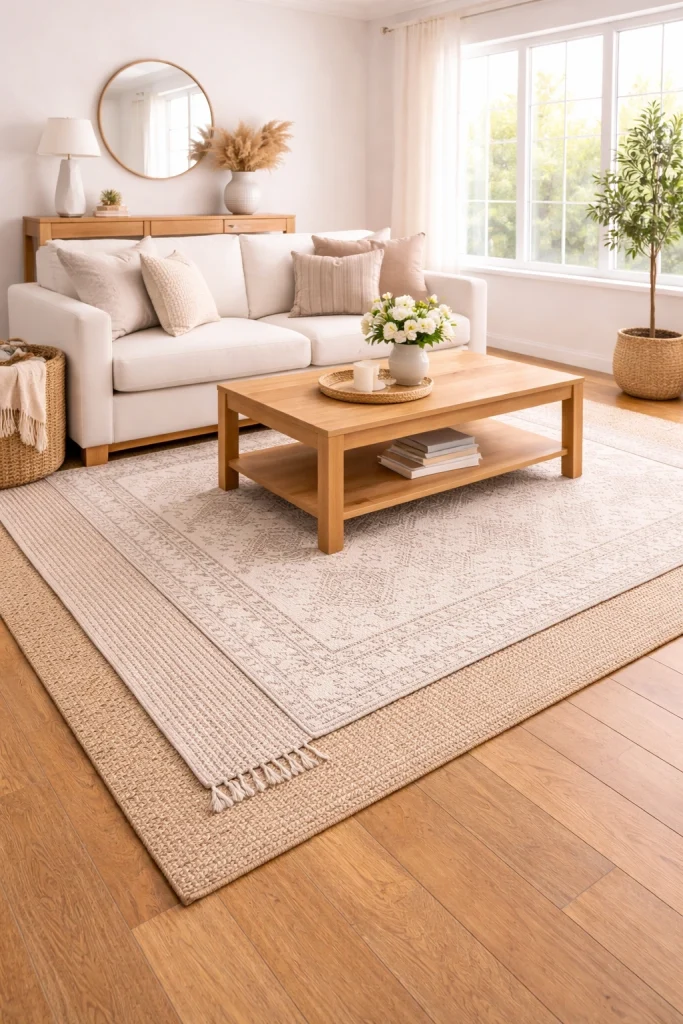
Introduction
10 Rug Size Guide: How to Choose the Perfect Rug Size for Every Room (Without Guessing) helps create balanced, stylish, and well-defined interiors. Choosing the correct rug size is essential for improving room layout, enhancing furniture placement, and adding visual harmony to living rooms, bedrooms, dining areas, entryways, and home offices.

The right rug can anchor furniture, define zones, and make any space feel more comfortable and organized. This rug size guide explains practical ways to select the perfect rug dimensions for different rooms without guesswork. With smart placement ideas and layout tips, it becomes easier to choose rugs that elevate interior design while maintaining proper scale, proportion, and style throughout the home.
Living Room Rug Size Layout Guide
A Living Room Rug Size Layout Guide helps create a balanced, cohesive, and visually appealing seating area. The ideal rug size should be large enough to anchor all main furniture, including the sofa and accent chairs, with at least the front legs placed on the rug. This placement defines the conversation zone and enhances room flow.
In spacious living rooms, a large area rug creates unity, while in smaller spaces, a medium rug maintains proportion without overcrowding. Neutral tones, textured materials, and proper alignment with a coffee table improve overall aesthetics. Choosing the right rug size ensures comfort, symmetry, and a well-structured living room design.
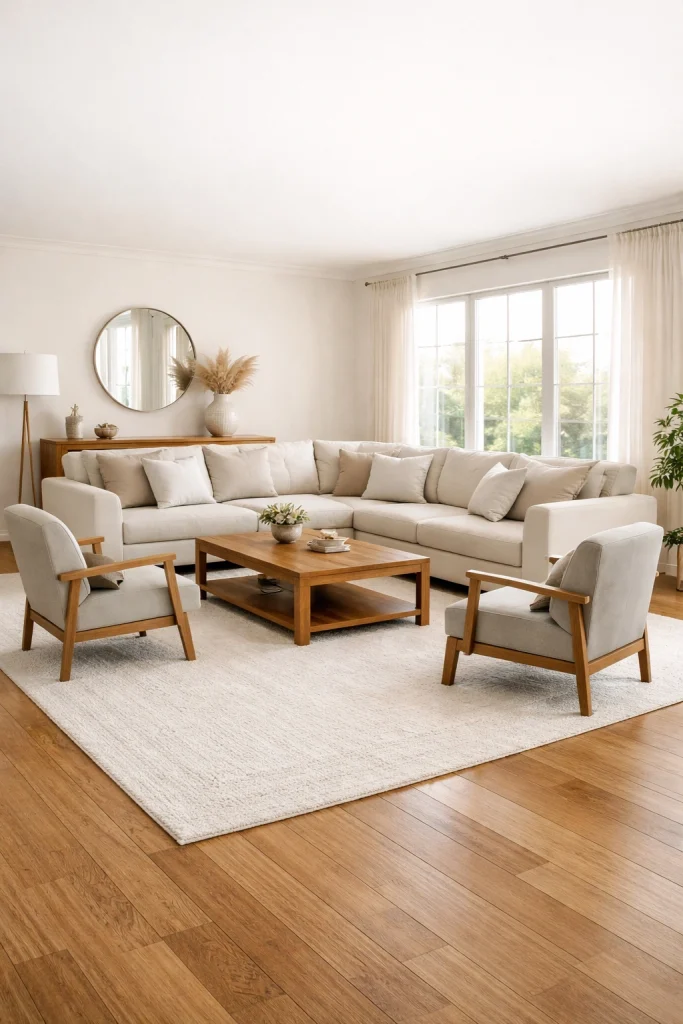
Small Living Room Rug Size Solution
A Small Living Room Rug Size Solution focuses on maximizing space while maintaining balance and comfort. The right rug size should be large enough to sit under the front legs of the sofa and nearby seating, creating a defined and cohesive area without overwhelming the room. In compact spaces, a medium-sized rug works best to visually expand the layout while keeping proportions intact.
Light colors, subtle patterns, and soft textures enhance openness and brightness. Proper rug placement helps organize furniture, improve flow, and make a small living room feel more spacious, functional, and visually appealing without cluttering the overall design.

Bedroom Rug Size Placement Guide
A Bedroom Rug Size Placement Guide helps create a comfortable, balanced, and visually appealing sleeping space. The ideal rug size should extend beyond the sides and foot of the bed, allowing enough surface area for a soft landing when stepping out. For queen or king beds, a large area rug placed underneath the bed anchors the entire layout and enhances symmetry with bedside tables.
In smaller bedrooms, partial placement under the lower portion of the bed maintains proportion while saving space. Neutral tones, plush textures, and proper alignment improve warmth, comfort, and overall design, making the bedroom feel cozy, organized, and stylish.

Small Bedroom Rug Size Strategy
A Small Bedroom Rug Size Strategy focuses on maximizing space while maintaining comfort and visual balance. The ideal rug size should be medium and placed partially under the bed, typically covering the lower two-thirds to create a sense of openness. This placement extends the room visually without overcrowding the layout.
Light-colored rugs, subtle patterns, and woven textures enhance brightness and make the space feel larger. Keeping furniture minimal and aligned with the rug helps maintain clean proportions. A well-chosen rug size improves flow, adds warmth, and transforms a small bedroom into a cozy, functional, and stylish retreat.
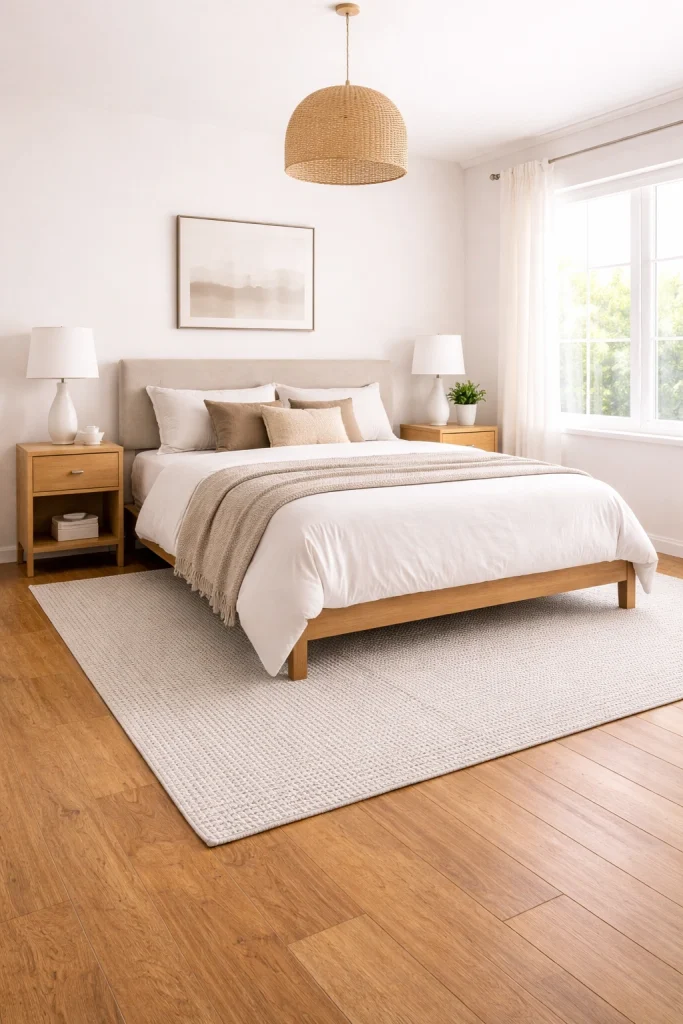
Dining Room Rug Size Guide
A Dining Room Rug Size Guide ensures proper balance, functionality, and a polished look. The ideal rug size should extend at least 24–30 inches beyond all sides of the dining table, allowing chairs to remain fully on the rug even when pulled out. This prevents uneven movement and protects flooring while maintaining a cohesive layout.
A large rectangular rug works best for standard dining tables, creating symmetry and visual structure. Neutral tones, durable materials, and low-pile textures improve practicality and style. Choosing the correct rug size enhances comfort, defines the dining area, and creates a well-organized, elegant dining room space.

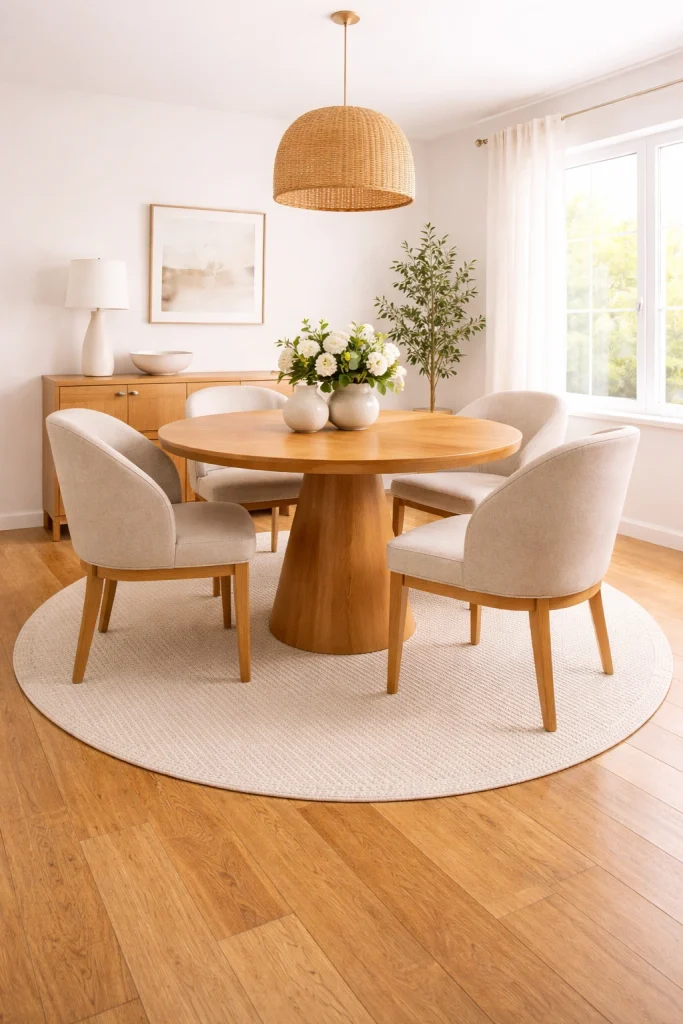
Round Dining Table Rug Size Guide
A Round Dining Table Rug Size Guide focuses on creating visual harmony and proper proportion in dining spaces. The ideal rug should be round and extend at least 24–30 inches beyond the table edge, ensuring chairs stay fully on the rug when pulled out. This improves comfort and maintains a balanced layout.
Matching the rug shape with a circular dining table enhances symmetry and flow. Soft textures, durable materials, and neutral or subtle patterns add style without overwhelming the space. Choosing the right rug size helps define the dining area, supports smooth movement, and creates a cohesive, elegant, and functional interior design.
Entryway Rug Size Guide
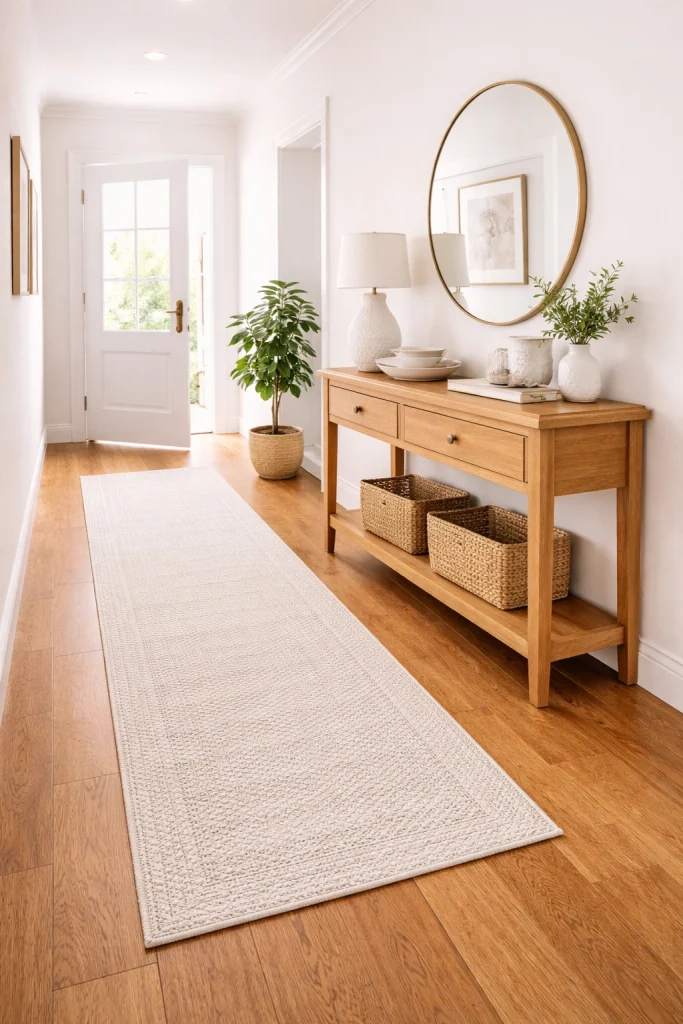
An Entryway Rug Size Guide helps create a welcoming, balanced, and functional entrance space. The ideal rug size is typically a long runner that fits the length of the hallway while leaving equal space on both sides for a clean look. Proper placement ensures smooth foot traffic and protects flooring from daily wear.
In smaller entryways, a compact rug can define the area without overcrowding. Durable materials and low-pile textures work best for high-traffic zones. Neutral tones or subtle patterns enhance brightness and style. Choosing the right rug size improves flow, adds warmth, and creates a neat, inviting entryway design.
Kitchen Rug Size Placement Guide
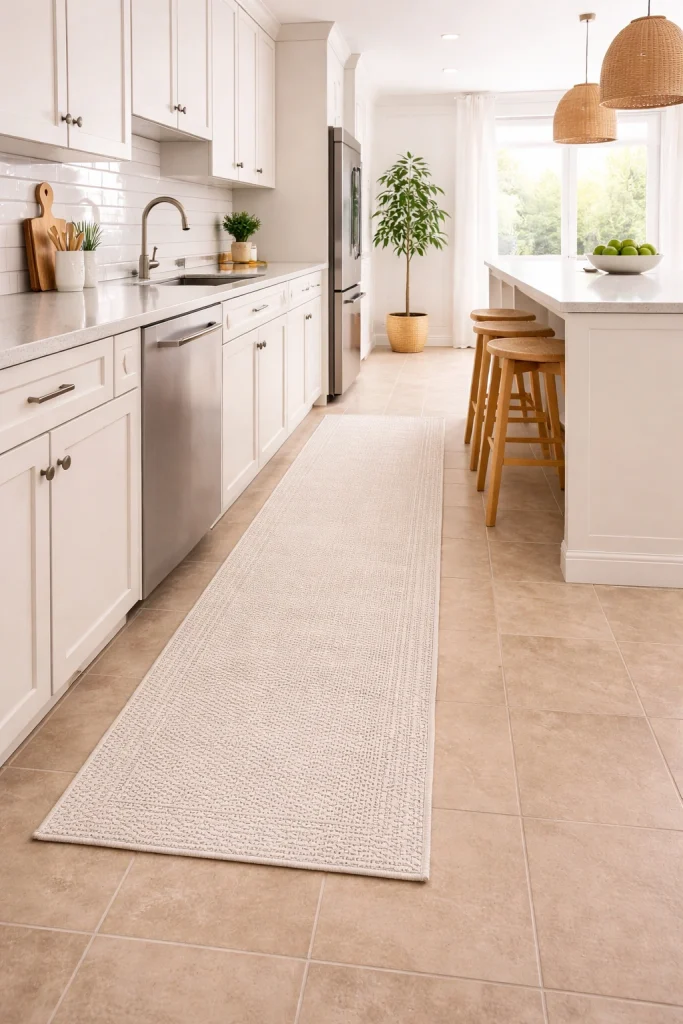
A Kitchen Rug Size Placement Guide helps improve functionality, comfort, and visual balance in busy cooking spaces. The ideal rug size is usually a narrow runner placed along cabinets, in front of the sink, or beside an island to support daily movement. Proper placement reduces floor strain and protects surfaces from spills and wear.
In larger kitchens, multiple rugs can define work zones while maintaining flow. Low-pile, washable, and durable materials are best for easy maintenance. Neutral tones or subtle patterns blend seamlessly with cabinetry. Choosing the right rug size enhances safety, comfort, and creates a clean, well-organized kitchen layout.
Home Office Rug Size Guide
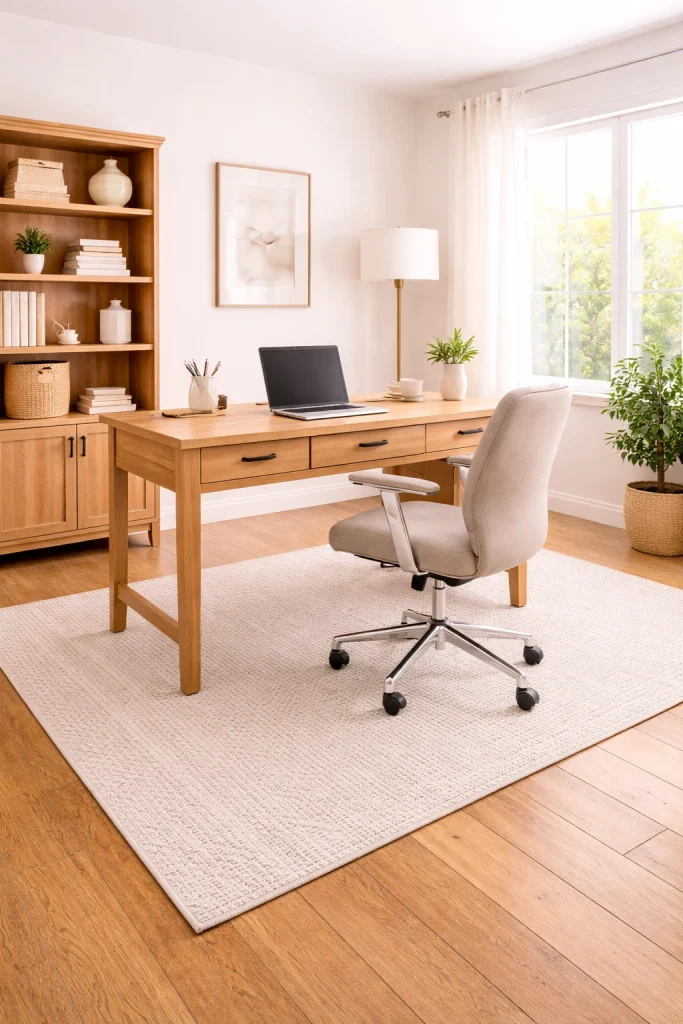
A Home Office Rug Size Guide helps create a structured, comfortable, and visually balanced workspace. The ideal rug size should be large enough to fit under the desk and allow the chair to move freely without slipping off the edges. This ensures smooth movement and protects flooring from wear. In compact offices, a medium-sized rug works best to define the work zone without crowding the space.
Neutral tones and low-pile textures support a clean, professional look while reducing distractions. Proper rug placement anchors the furniture, improves acoustics, and enhances overall productivity, making the home office feel organized, functional, and inviting.
Layered Rug Styling Guide
A Layered Rug Styling Guide helps add depth, texture, and visual interest to any living space. This technique involves placing a smaller patterned rug over a larger neutral base rug to create contrast and dimension. The base rug should be large enough to anchor the main furniture, while the top rug adds personality and style.
Layering works especially well in living rooms and bedrooms, enhancing warmth and comfort. Neutral tones paired with bold patterns create a balanced look without overwhelming the space. Proper alignment and proportion are key to maintaining a cohesive, modern, and stylish interior design.